The Origins of Chinese Characters
汉字的起源
Chinese characters are an ideographic writing system gradually created and accumulated by ancient Chinese people over thousands of years.
The Legend of Cangjie
According to ancient legend, Cangjie (仓颉), a historian of the Yellow Emperor, created Chinese characters by observing the tracks of birds and animals. When the characters were created, "grain rained from the sky and ghosts cried at night" — a testament to the profound impact of writing on human civilization.
Archaeological Evidence
The earliest known Chinese writing is the Oracle Bone Script (甲骨文) from the Shang Dynasty (c. 1600–1046 BCE). These inscriptions were carved on turtle shells and animal bones for divination purposes. Over 4,500 different characters have been identified, with about 1,500 successfully deciphered.
Evolution of Scripts
- Oracle Bone Script (甲骨文) — Shang Dynasty, earliest known form
- Bronze Script (金文) — Cast on bronze vessels during Zhou Dynasty
- Seal Script (篆书) — Standardized by Qin Dynasty
- Clerical Script (隶书) — Han Dynasty, more efficient writing
- Regular Script (楷书) — The standard form used today
- Running Script (行书) — Semi-cursive, practical and elegant
- Cursive Script (草书) — Artistic, expressive, and fluid
Calligraphy Gallery
Oracle Bone Script (甲骨文)
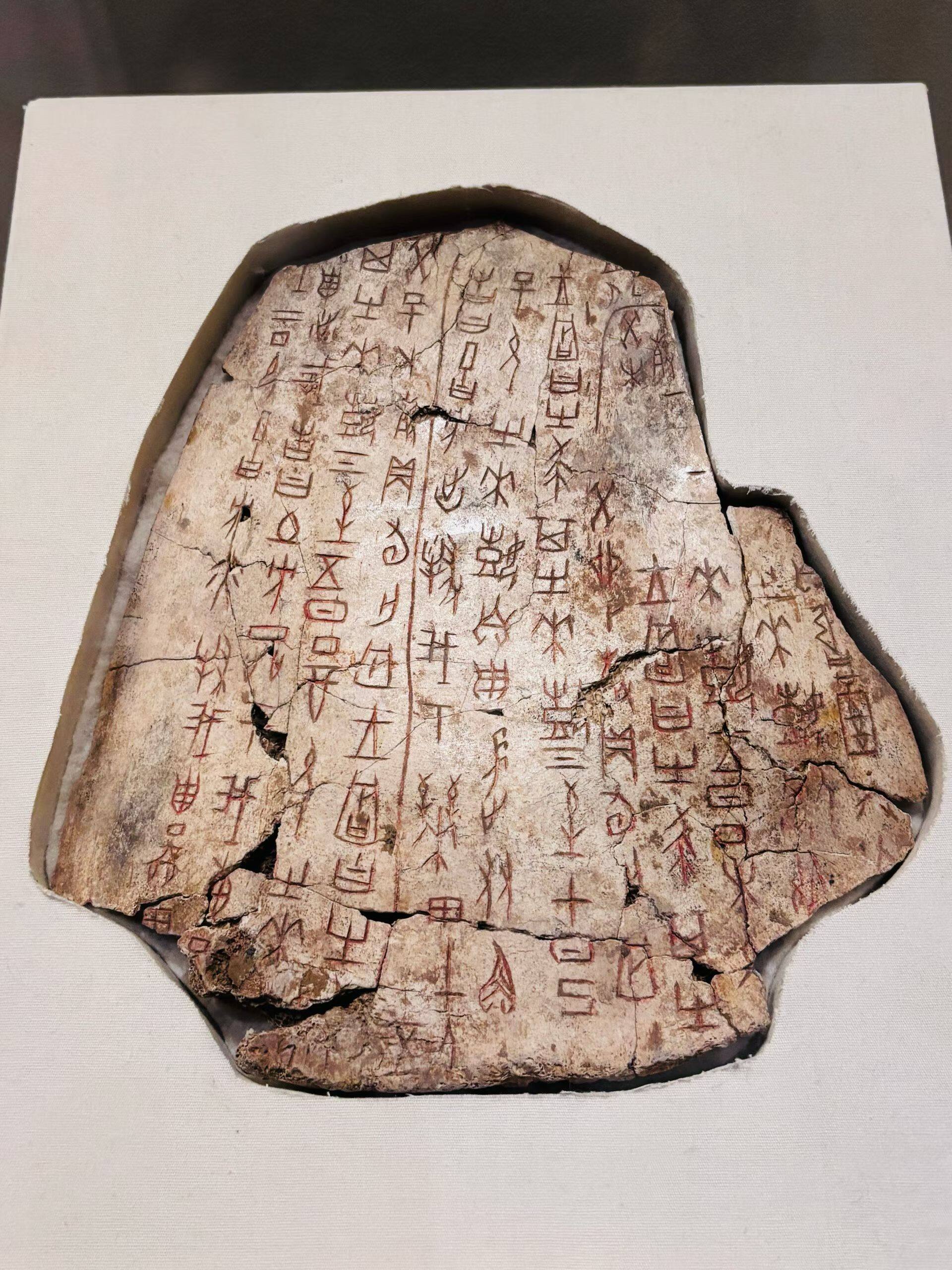
Oracle Bone Script is the earliest known form of Chinese writing, dating back to the Shang Dynasty (c. 1600–1046 BCE). These inscriptions were carved on turtle shells and animal bones for divination purposes.
Bronze Script (金文)
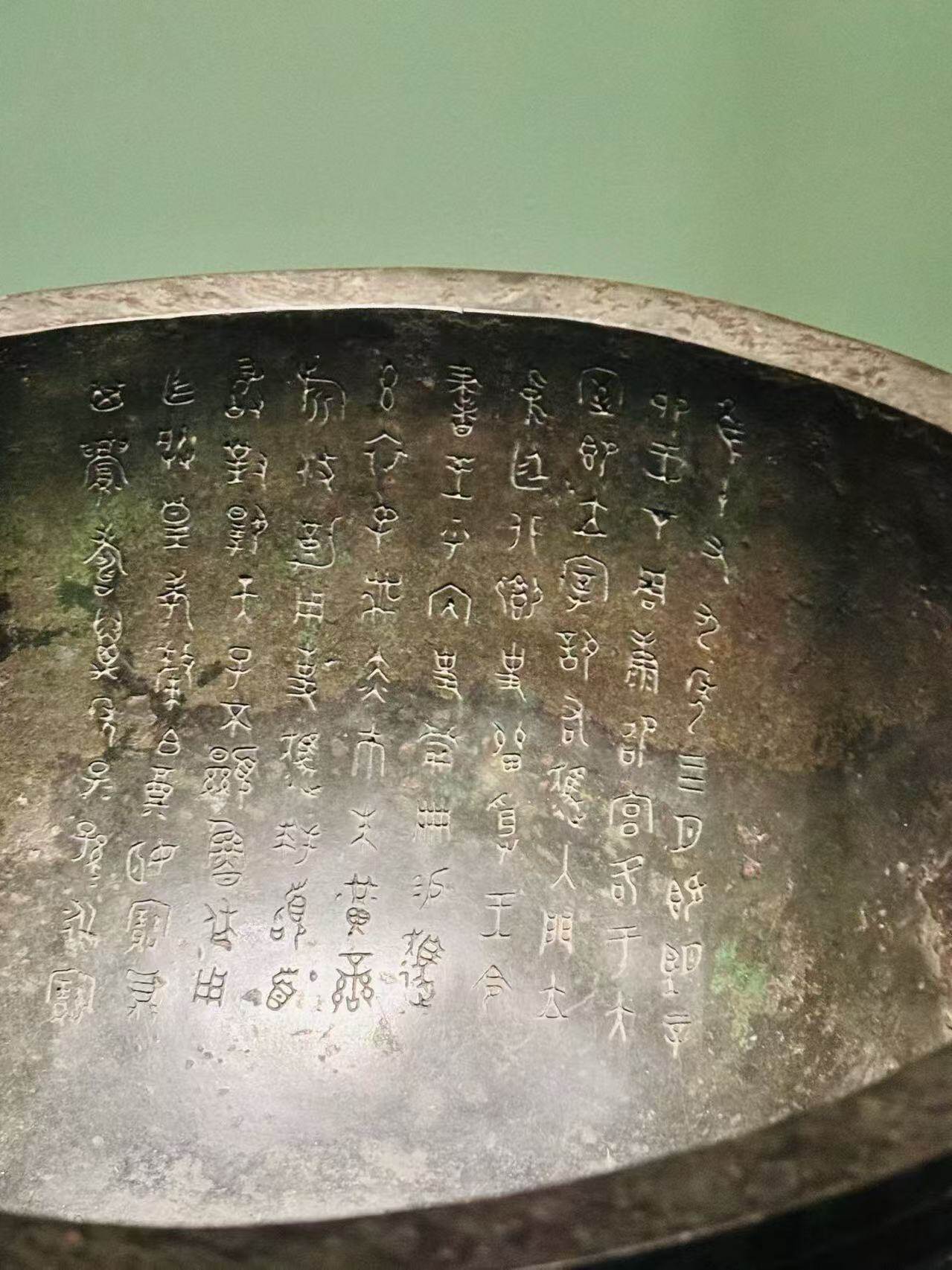
Bronze Script was cast on bronze vessels during the Zhou Dynasty (1046–256 BCE). These inscriptions recorded important events, royal decrees, and ancestral worship ceremonies.
From ancient oracle bones to modern digital text, Chinese characters have carried the wisdom and culture of one of the world's oldest continuous civilizations.